Modern AI platforms make it easy to ingest large volumes of data. Cloud-native sources, event streams, and application logs flow smoothly into lakes, warehouses, and feature stores. As a result, many AI teams assume their models have a sufficiently complete view of the business.
Often, they don’t.
Some of the most valuable enterprise data; transactional, operational, and system-of-record data, never reaches modern analytics or GenAI pipelines. Not because it lacks relevance, but because it lives in core systems that Data & AI teams don’t typically prioritize or integrate.
AI pipelines tend to optimize for accessibility and speed. Data that is already cloud-based or API-friendly is incorporated first. Over time, this creates an unintended bias: models learn from what is easy to collect rather than what most accurately represents how the business operates.
Core system data that typically resides on mainframes is different. It is authoritative, highly structured, and often spans years of operational history. This data captures real customer behavior, financial movement, entitlements, and transactions. These signals matter most for prediction and decision-making.
When these signals are missing, models may still function, but their understanding of the business is incomplete.
Historically, core system data has been consumed in batches hours or even days after events occurred. For traditional reporting, this was acceptable. For modern AI, it is not.
Many high-value AI and GenAI use cases depend on what is happening now, not what happened yesterday:
In these scenarios, delayed data isn’t just less useful, it can actively degrade model accuracy and business outcomes.
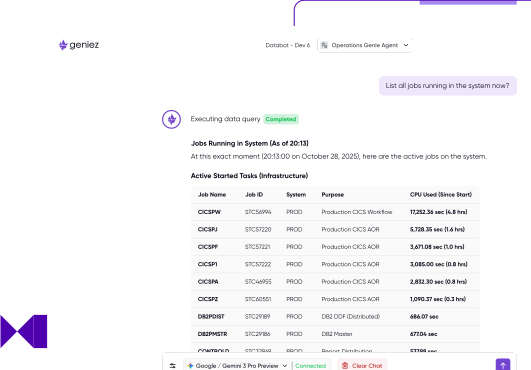
Figures show that Mainframes process 70%1 of the world’s most critical transactions in real time. When this data is made available at source, rather than through delayed methods, it becomes a powerful input to AI and GenAI systems.
Real-time mainframe data enables:
Without real-time access, GenAI models operate on a lagging view of reality, forcing teams to compensate with heuristics, thresholds, or conservative assumptions.
A modern GenAI strategy is not defined by where data lives, but by whether models can access authoritative data at the moment decisions are made.
As AI moves from experimentation to production, real-time integration with core systems including mainframes, becomes a competitive requirement, not a technical nice-to-have.
If GenAI initiatives are failing to deliver expected impact, the issue may not be the models or the platforms. It may be that your AI is learning from an incomplete, and out of date, view of the business.
1 www.ciodive.com/news/ibm-mainframe-sixty-years-anniversary-cloud-skills